Daily Digest 3_10_10

“Net Neutrality is a Muddle”

http://www.nbler.com/internet-high-priestess-esther-dyson-on-net-neutrality.html

I thought this was a great statement and sums up what I have been saying for a while now. People are not being given all the information about why the currently proposed Net Neutrality changes will not work to their benefit. Esther Dyson talks about this and how two tiered pricing is not necessarily a bad thing. The most important part of the dialogue is that she gives concrete reasons why!!!!  Something i have repeatedly said the the current proponents of Net Neutrality have yet to be able to do. People also don’t understand that tiers of Internet access already exist and that most of us are on the lowest tier and are doing fine. The big issue is that there are heavy users who are bogging down that tier and will continue to do so to your detriment unless new structures are put in place.

The National Broadband Plan is Coming to Town. Did You Know?

http://4g-wirelessevolution.tmcnet.com/broadband-stimulus/topics/broadband-stimulus/articles/77826-national-broadband-plan-has-two-major-provisions.htm

http://gigaom.com/2010/03/07/national-broadband-plan-will-be-a-day-early-but-fall-short/

Most people are not aware that the FCC is working on a National Broadband Plan that should create provisions to ensure that at some point in the future everyone has access to the Internet and then those who have access to it are given the knowledge on how to use it to their benefit. This is a pretty big deal and It’s important for all of us to understand the issues involved and how this plan will affect our future. Give these two articles a read and start the dialogue with your friends.

Get Serious about College With a Virtual Advisor

http://techcrunch.com/2010/03/11/myedu-will-be-your-curriculum-guide-and-virtual-college-advisor-rolled-into-one/

As part of my commiment to show different examples of things you can do with a broadband internet connection I present MYedu.com. MYedu is a service that allows you start building a plan towards your college goals right now and see that plan all the way through to graduation. What I like about this service is that is gets you and your child thinking about how to plan for college now and also puts tools in place for when you get there. Take a look a let me know what you think.

Let’s Talk Solutions

I don’t think anyone is surprised by the two broadband-related studies released in the last several days.  An FCC survey concluded “affordability” is one of the main reasons why nearly one-third of Americans do not have broadband at home.  And the Joint Center for Political and Economic Studies found “lower income groups continue to lag in their internet use.”   Don’t get me wrong.  Research is helpful, but we need to move on to the solutions.  Some people are.  Like David Sutphen, co-chair of the Internet Innovation Alliance.

Stuphen recently said, “The new FCC study underscores the need to remain focused on closing the digital divide by addressing the American public’s attitudes about broadband and reinforces the IIA’s belief that digital literacy must be a key component of the National Broadband Strategy, due to Congress (this month).  In a 2009 survey of 900 African Americans and Hispanics by Obama pollster Cornell Belcher, 43 percent of respondents cited not knowing how to use the Internet or not seeing the need for the Internet as the reason why they are not online, and 44 percent of those same minorities polled said they would be more likely to subscribe to Internet services if they were provided free lessons on how to use the technology.  Bridging the digital divide and getting every American online should be our top priority—broadband Internet is the great enabler and the great equalizer.”

I’ll be interested to see if the FCC provides any training or lessons on how to use the technology.   And, as the survey points out, there must be relevant content on the Internet. Otherwise, minorities will continue to find little reason to invest in Internet access, and the gap will not be closed.   Who out there is creating thought-provoking content for the minority communities that is driving traffic to their sites every day, especially content that is inspiring and motivating our next generation?

Commented on “Black Web 2.0″

I’m not crying foul. I’m speaking reality and yes I’m biased because I care about the plight of Black people because I am one and I care about the plight of Blacks and Hispanics because we are both minorities who are underserved in the US. Using the same data you referenced above blacks and Hispanics are the only groups who are below 10%. For you to say White Americans are the big users is funny to me. Who is crying foul? I’ve been to Silicon Valley and White America is there. The reality is the American education system does need to be changed but for you to not recognize that the position Blacks and Hispanics is not more of an issue is kind of silly Andy.


Originally posted as a comment
by navarrowwright
on Black Web 2.0 using DISQUS.

Be Part of History!

mixtape

This Sunday, Anthony Anderson, Royale Watkins, teamwork entertainment and I have partnered to bring the first interactive live comedy show to Facebook. Sunday at 8pm the Mixtape comedy show hosted by Anthony Anderson, will be streamed live on Facebook. Help us make history by making this the biggest show ever. RSVP for the show at the Mixtape fan page here http://www.facebook.com/mixtapecomedy and join us Sunday night @8pm. Tell a friend, tell all your friends and be a part of history. This project truly shows the opportunities created by broadband. On the one side it’s give us the opportunity to be entrepreneurial and  create a new experience that can reach a large audience. And for the consumer the ability to be involved in an immersive entertainment experience from the comfort of their own home. This is just one example of what you can do with broadband access and it’s my hope that endeavors like this encourage a new generation of people to see what other possibilities for enriching experiences exist online. So Sunday night join us and laugh until your side hurts and remember this is only one of many things you can do with broadband at your fingertips.

anthonyandroyale

Innovate to Save The News

Philadelphia Inquirer.

There are few cities in America where traditional journalism runs deeper than in Philadelphia. This is where Benjamin Franklin almost 300 years ago bought the Pennsylvania Gazette, considered the most successful newspaper in the colonies. Today, the Philadelphia Inquirer is the third-oldest surviving newspaper in our nation, and its staff has won 18 Pulitzers. Over the years, I’ve enjoyed watching the Philadelphia literary scene flourish and change, and have been particularly attuned to the ways the journalism market has morphed to better accommodate the realities of an increasingly Internet-based society.

Eric Newton, Vice President of the journalism program at the John S. and James L. Knight Foundation, explained some of those journalistic changes very well in a recent article, “Innovating to Save the News,” where he reports on the results of research conducted by the Foundation, and prepared by the Knight Commission, on the Information Needs of Communities in Democracies.

Not surprisingly, the report found that journalism as we’ve known it – news delivered on a system from “tree to paper to press to truck to your driveway” – has been thrown into chaos by the Internet. But the benefits of the mass media in the Internet age– to communities, schools, business, our environment and democracy – are more apparent than ever before. And the journalism required in this digital era in which we live must continue to adapt to meet the changing needs of our communities. In the words of Newton, “journalism does not need saving so much as it needs creating.”

The Knight Commission offers 15 ideas, from making public libraries centers for digital training and access, to championing news literacy in the public schools; creating public broadcasting that is more local and interactive, to building city hall Web sites that make public information easy to understand. And I, like Newton, believe that “America needs universal, affordable broadband access. Everyone, no matter his age, race, income, or neighborhood, should be able to go online to get whatever he wants – video, audio, photos, and text – from anywhere in the world as fast as anyone else can. In the digital age, countries without high-speed broadband will become second-class nations filled with second-class citizens, able to vote, but not knowing why they should; able to work, but not knowing how to find a job online.”

I actually made this same point a few weeks ago while attending the annual conference of the National Newspaper Publishers Association in Charlotte, North Carolina. There I sat on a social media panel focused on providing new insights into the ways that journalism and the news media should be adapted to better accommodate the needs and interests of Americans in the Internet age. If I’ve said it once, I’ve said it 1,000 times – the revolution will not be television, but it will be digitized and placed online. And to secure our successful transition to the digital age, we can all work together within our communities and with our local, state and federal governments to ensure that all Americans are adequately prepared for, and have more than ample opportunity to adopt and use, the Internet as our primary engine of communications, economic and global success.

People Have to be Online to Become Cyber Entrepreneurs

At the MMTC Broadband and Social Justice Summit, Commissioner Mignon Clyburn, made a passing reference to net neutrality when she discussed how tiered pricing would be a market entry barrier to some online entrepreneurs.  I don’t disagree.  Anything that increases costs for starting and sustaining any business, online or otherwise, is a barrier for new entrepreneurs. However, before we can get people to the point where they start a business online, we have to get them online.

Broadband deployment and adoption are said to be the primary focus of the National Broadband Plan that the FCC will unveil next month.  However in recent weeks, attention has been focused on net neutrality. The six principles set forth by the FCC are worthy of discussion.  As I’ve mentioned before, the two major factions — content providers, like Google, and the major phone and cable companies — both raise legitimate concerns of access and cost.  But I question whether this is the discussion to have at this time.  If I’ve said it once, I’ve said it a thousand times, we’ve got to get people online and using the technology before we start creating additional reasons to keep them offline.

As Pew reported last year, broadband adoption rates for minorities are increasing, but nowhere near the pace of Whites.  Wireless adoption in minority communities has outpaced that of Whites, but opportunities to start a business from a handheld device are limited. It is no secret that most new businesses start in the garages and spare rooms of our homes.  If we want to truly experience the transformative power of broadband in expanding opportunity for entering the market for minorities, the focus must remain on methods to increase broadband adoption in the home.  

Below is a video where I explain my take the issue and more importantly why entrepreneurship increase among minorities is crucial.


Getting the Word Out

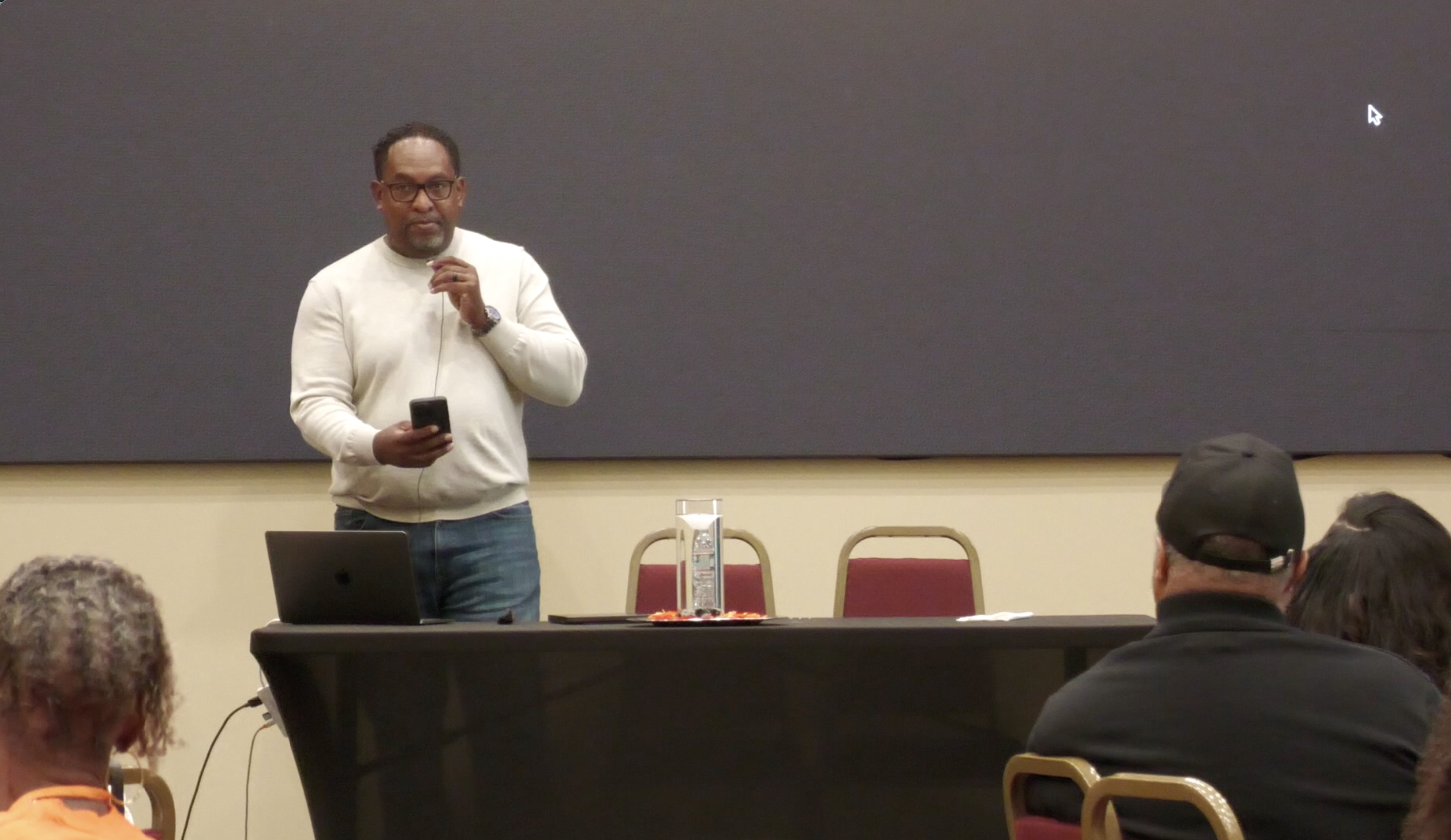
Last night I had the honor of speaking on a panel about opportunities in the Web 2.0 space to the members of the Delta Sigma PI business fraternity of Howard University. I think it was more exciting for me than it was for them. It was exciting to see so many young people who are thinking about how to create a business, and who are eager to have dialogue about the Internet and learn how they can use it to shape their ideas into companies. It was also interesting to see their reaction to the latest data around broadband adoption among minorities in the US. They were shocked to hear that the numbers were so low and I‘m one of those “smart people” who are already working on an idea to help improve the numbers. I’m eager and excited to do more talks like the one I did last night, so if you are part of an organization on a college campus and have some people willing to listen, drop me a line at info@maxlevsolutions.com. And finally, a special shout out to all the students at Howard who were in the audience last night. Hope you received some value from the conversation.

Making sure everyone is a part of the broadband wave

UPDATE – If a picture is really worth 1,000 words, I’m going to guess a video is worth about a million, so I hope you do take five minutes to watch this video about the Exaflood. I’ve been in technology for over a decade now, and it still surprises me how far we’ve come in the realm of data consumption. I originally made mention of this video in a an earlier post here.

This video started me to thinking, so i found some more data to back up the case that it’s making…

A few days ago, Forbes.com contributor Oliver J. Chiang provided some very interesting numbers about how our lives have become increasingly digital during the last decade. For instance, when we started the new decade, about 6.3 percent of the households in the U.S. had a broadband connection; now that number has increased to 63 percent and is continuing to grow rapidly.

Anyone who has looked at their inbox today won’t be surprised by this one – in 2000, about 12 billion e-mails were sent each day, and now it is closer to 247 billion (and I would say they are more relevant as progress has been made in limiting spam.).  And in 2000, there were fewer than 100,000 blogs, and at the end of 2008 there were an estimated 133 million blogs (so thanks for reading mine)!  Could we begin to guess what these numbers will look like in 2020?

Here’s the link to the Forbes.com story for additional statistics that make it clear that we will continue to put more stress on our networks and data-delivery capabilities in the next decade. We all have begun to realize how important the Internet and access to all the opportunities it avails to us are. We now have to make sure that those opportunities are always available equally to everyone.

Speak Up Now While You Have The Chance And For the People Who Can’t

As we approach the Thursday, January 14, 2010 deadline to comment on the FCC’s proposed rules for Network Neutrality, I’m reminded of the marbled halls of the FCC and the relative frenzy that has consumed our nation’s capital, and all of the politicians, lawyers and lobbyists who are involved in this contentious issue. But really, my mind is somewhere else today.

Today, I’m thinking of the young woman in Detroit who has a dream of a better life, the young man in Chicago who has an idea that will uplift his community, and the inner-city entrepreneurs, from Los Angeles to Atlanta, who know that their vision can change the world. It’s not just make-believe, these people are real, and there are many more like them from every city town, borough and corner of the country that you can think of. What is the common thread? None of them can make their dreams happen without broadband access. But that same broadband access that is so essential to their growth and success will be threatened if the government enacts policies that create greater costs for families, especially low-income ones, to obtain and use those services, or if those policies erode the incentives to invest in the networks upon which we so heavily rely.

The FCC, through this link, http://fjallfoss.fcc.gov/ecfs/upload/display?z=izmxi, provides an opportunity for public comments on this issue for those who want to weigh in on network regulation, or the so-called “net neutrality” proceeding. You are certainly free to make up your own mind after careful consideration and research, but I personally can’t agree with any set of policies that could possibly increase the digital divide, or make it more different for minorities and low-income people to fully participate in the social and economic life of this country. Over the past few months, I’ve made my opinions clear on this issue, and I intend to do so for the foreseeable future, so if you are unclear on the issue or have questions for me, drop me a note in the comment thread.

Here’s my final thought for the day: Is it just me, or does anyone else see the irony that low-income people and minorities – the folks who could benefit the most from broadband – are less likely to be able to weigh-in on this issue because they lack broadband access in the first place? Why does is seem like the FCC is favoring the opinions of bloggers and people who clearly have broadband connections, and why is the system they’ve set up likely to disregard or further disenfranchise the voices of the people who really need the services enabled by high-speed Internet connections? Our focus needs to be on creating opportunities for broadband adoption and use, not in limited the terms of access so much so that adoption and use or made more unaffordable for the people who need it the most.  Tell me your thoughts.  I’m looking forward to the conversation…

Much Ado about Google

As I’ve said for some time now that once we go down the path of relying on the government to regulate the Internet, the pattern of regulation would extend far beyond any restrictions that are being proposed for Internet providers.  Here are a couple articles about “search neutrality” that describe potential restrictions that need to be placed on Google.

http://www.nytimes.com/2009/12/28/opinion/28raff.html?_r=1 .   In this article from the New York Times, the writer makes the case that Google ignores search algorithms to promote its own products. My first thought was that Google is a business and it was never said anywhere that a business can’t promote its own products. But what was even more interesting about this article was that the person writing this post was the founder of a company that has created its own search technology and feels Google has stifled their success. He actually says, “Google’s treatment of Foundem stifled our growth and constrained the development of our innovative search technology.”  This is just one example of the ways that people can start seeking additional government regulation of the Internet just to protect their own interests. For each person like this who blames large companies for their lack of success there are thousands like myself who credit access to broadband and the tools on the Internet as the keys to our success. But it’s only through the current competition and openness of the Internet that has made my success, and the achievements of others, possible.

The next story I came across was a blog post that basically accused the author above of  “More Whining About Google.”   While he makes a good case, I find it funny that this author does not see the parallels between the whining about Google and the whining about Internet providers that is done by some Net Neutrality advocates.  We have more choices to broadband access now than ever and those companies compete for our business by innovating just like Google does. I say let’s stop the whining altogether and focus on making sure everyone has access to the Internet and the tools that companies like Google provide.

Subscribe to RSS Feed Follow Navarrow Wright on Twitter!